
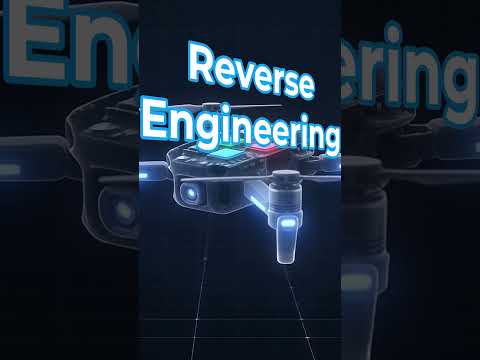
Have you ever wondered how engineers recreate a physical component without access to original blueprints? The answer lies in reverse engineering. Reverse engineering is the disciplined process of deconstructing an existing product, system, or component to analyze its design, functionality, and manufacturing specifications. In modern product development, this process plays a vital role within the Engineering CAD ecosystem, bridging the physical and digital worlds.
The Core Process of Reverse Engineering
At its heart, reverse engineering involves taking precise physical measurements of an object and translating them into digital geometry. The workflow typically begins with non-destructive inspection techniques, such as 3D laser scanning or Coordinate Measuring Machines (CMM). These tools capture millions of data points—collectively known as a point cloud—that map the exact shape and contours of the physical part.
Once captured, specialized software converts the raw point cloud into a structured digital mesh. From there, engineers translate the data into parametric Engineering CAD models. This allows teams to analyze internal mechanics, detect material wear, or update obsolete components with high geometric accuracy.
Key Applications Across Industries
Reverse engineering is far more than simple replication; it is a catalyst for design optimization and problem-solving. Major applications include:
- Legacy Part Restoration: Recreating replacement components for vintage or out-of-production machinery where original technical drawings are missing.
- Competitive Analysis: Studying existing products to evaluate structural integrity, ergonomics, and material efficiency.
- Customization and Aftermarket Design: Creating custom modifications that seamlessly align with complex physical assemblies.
Elevating Workflows with Advanced Tools
Integrating modern 3D scanning technology directly with powerful Engineering CAD software drastically reduces product development lifecycles. Instead of starting from scratch, engineers can leverage physical prototypes as a solid baseline. They can then refine parameters, run stress simulations, and optimize designs for additive manufacturing or traditional machining.
Final Thoughts
Whether you are restoring legacy hardware, refining a prototype, or analyzing competitive hardware, reverse engineering provides a reliable pathway to innovation. By combining high-precision measurement tools with digital modeling, manufacturers can continuously improve efficiency, quality, and product performance.


