
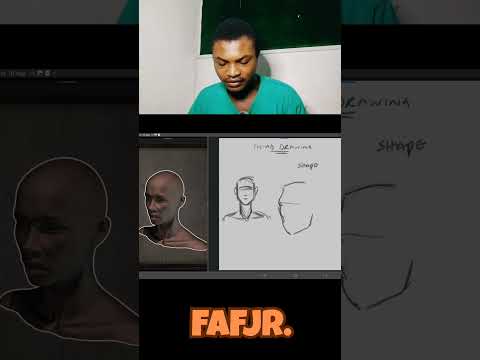
Drawing the human head can often feel like one of the most intimidating challenges for artists. Whether you are creating character concepts or animating dynamic scenes, getting the proportions and perspective right is essential. Mastering the head structure is one of the most fundamental skills in 2D drawing, serving as the anchor for expressing character emotion, direction, and personality.
In this guide, digital artist and 2D animator Fidelis shares practical techniques to break down complex head construction into manageable, repeatable steps.
Start with Basic Geometric Shapes
The secret to drawing compelling heads lies in simplification. Instead of jumping straight into complex details like eyes or hair, begin with basic form construction:
- The Base Sphere: Start by sketching a simple sphere to represent the cranium.
- Adding the Jaw: Extend guidelines downward from the sphere to define the chin and jawline.
- Center Lines: Draw vertical and horizontal cross-hairs across the sphere to establish the direction the head is facing.
Using simple geometry allows you to visualize 3D volume on a flat canvas, which significantly helps elevate your overall 2D drawing process.
Placing Facial Features with Precision
Once the primary structure is established, placing facial features becomes much simpler and more accurate. Keep these standard proportion rules in mind:
- Eye Line: Positioned roughly halfway down the total length of the head.
- Nose Base: Located halfway between the eye line and the bottom of the chin.
- Mouth Line: Placed about one-third of the distance down from the nose to the chin.
By keeping these guidelines light and flexible, you can easily alter feature placements to create unique, expressive character designs—from realistic portraits to stylized animation models.
From Static Sketch to Dynamic Animation
For digital artists and animators, head drawing is not just about a single static image; it is about maintaining structural consistency across multiple angles. Practicing head turns, tilts, and varying perspectives prepares your artwork for dynamic poses and fluid movement.
Refining these core visual elements builds a solid artistic foundation, whether you're working on character design sheets or full-fledged 2D drawing projects for animation. Grab your stylus, practice these step-by-step techniques daily, and watch your character art transform!


