
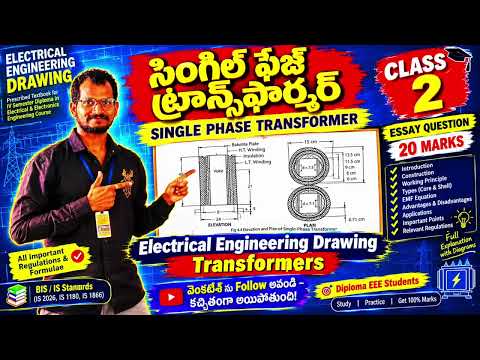
In the field of Electrical and Electronics Engineering (EEE), being able to visualize and represent complex components is a fundamental skill. One of the most critical topics students encounter is the single-phase transformer. Often carrying a weightage of up to 20 marks in technical exams, mastering this specific diagram is essential for academic success. This guide simplifies the process, turning a seemingly complex task into an easy, step-by-step method.
Why the Single Phase Transformer Matters
A single-phase transformer is the backbone of power distribution and voltage regulation. In a typical Engineering Drawing exam, you aren't just tested on your ability to sketch; you are tested on your understanding of the core, the windings, and the relationship between the primary and secondary circuits. A neat, well-labeled diagram reflects a deep grasp of electrical theory.
Step-by-Step Drawing Process
To achieve a high score, follow this logical flow to ensure accuracy and neatness:
- The Magnetic Core: Start by drawing the rectangular core. Ensure the lines are parallel and the corners are sharp. This represents the laminated steel that carries the magnetic flux.
- Primary and Secondary Windings: Draw the coils on the left (primary) and right (secondary) limbs of the core. Use consistent loops to indicate the number of turns. Remember, the difference in turns defines whether it is a step-up or step-down transformer.
- Input and Output Terminals: Clearly mark the input AC voltage source on the primary side and the load terminals on the secondary side.
- Labeling: This is where many students lose marks. Ensure you label the Magnetic Flux (Φ), Primary Voltage (V1), Secondary Voltage (V2), and the Core itself.
Tips for Precision and Neatness
When practicing Engineering Drawing, precision is your best friend. Use a sharp H or 2H pencil for initial outlines to keep the work clean. Avoid freehand sketching for the core; always use a scale to maintain symmetry. A symmetrical drawing not only looks professional but also makes the technical aspects of the transformer easier for the examiner to read.
Conclusion
By breaking down the single-phase transformer into these manageable steps, you can tackle even the most daunting 20-mark questions with confidence. Regular practice is the key to perfection. As you continue to refine your skills in Engineering Drawing, you will find that these complex electrical components become second nature, paving the way for a successful career in engineering.


