
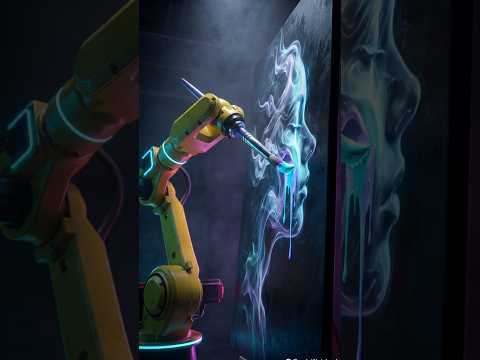
Have you ever wondered how artificial intelligence can turn simple spoken words into breathtaking visual designs? The landscape of digital content creation is evolving at a breakneck speed, and innovative tools like DreamPainter are leading the revolution. By seamlessly converting voice prompts into complex graphics, AI is making it easier than ever to produce stunning vector art without a steep learning curve.
The Secret Process Behind Speech-to-Art AI
The magic of modern AI art generation relies on sophisticated machine learning models trained on millions of visual assets and text pairings. When you speak into a tool like DreamPainter, an automatic speech recognition engine converts your audio into precise text parameters.
Next, neural networks analyze the intent, style, and subject matter of your prompt. The system then synthesizes unique imagery by mapping mathematical patterns to your vocal instructions, transforming abstract ideas into high-definition artwork in a matter of seconds.
Elevating Design Workflows with Vector Art
Traditionally, creating clean, scalable vector art required hours of manual path-tracing, node manipulation, and expertise in complex graphic software. Today, AI-powered generation streamlines this entire process.
By leveraging natural language processing and voice input, creators can generate scalable graphics suitable for web design, merchandise, and digital marketing. Instead of wrestling with pen tools, artists can simply describe their vision to instantly receive versatile vector art elements ready for refinement.
The Future of AI in Digital Design
As artificial intelligence continues to understand artistic context and user intent more deeply, the gap between concept and execution will shrink even further. AI-driven art tools serve as ultimate creative partners, helping both seasoned graphic designers and beginners rapidly prototype their ideas. By embracing these tech advancements, creators can focus on raw innovation while letting intelligent algorithms handle the heavy lifting.


