
The Mechanical Symphony Under Your Hood
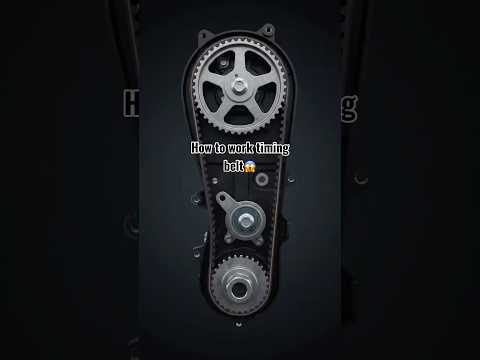
Have you ever wondered what keeps your car engine running in perfect harmony? To the naked eye, an internal combustion engine looks like a complex block of metal, but inside, it is a masterclass in precision timing. At the center of this mechanical symphony is the timing belt—a component so vital that the entire engine depends on its constant, rhythmic movement. Understanding this process becomes much easier when you can see the internal components moving in sync through a detailed 3D animation.
What is a Timing Belt?
The timing belt is a heavy-duty, reinforced rubber band with internal teeth. Its primary job is to synchronize the rotation of the crankshaft and the camshaft. The crankshaft moves the pistons up and down, while the camshaft opens and closes the intake and exhaust valves. For the engine to generate power, these two systems must work in perfect unison.
By utilizing a professional 3D animation, we can peel back the layers of the engine block to see exactly how the belt grips the gears, ensuring that valves open at the precise millisecond needed for air to enter and exhaust to exit.
The Stakes of Synchronization
The importance of the timing belt cannot be overstated, especially in "interference engines." In these designs, the valves and pistons occupy the same space within the cylinder, just at different times. If the timing belt slips or snaps, the synchronization is lost instantly. This leads to a catastrophic collision where the pistons strike the open valves, resulting in bent valves, damaged pistons, and a very expensive repair bill.
Visualizing these tight tolerances through 3D animation helps car owners appreciate why "engine timing" is a literal term. There is zero room for error; the belt must maintain its tension and structural integrity through thousands of revolutions per minute.
Maintenance and Care
Because timing belts are made of composite rubber materials, they are subject to wear and tear from heat and friction. Most manufacturers recommend replacing the belt every 60,000 to 100,000 miles. Unlike a battery or a tire, a timing belt often gives no warning before it fails—it simply snaps.
By understanding the mechanics behind the belt, you can stay ahead of your vehicle's maintenance schedule and keep your engine running smoothly for years to come. Knowledge is power, and seeing the inner workings of your car makes you a more informed and responsible driver.


