
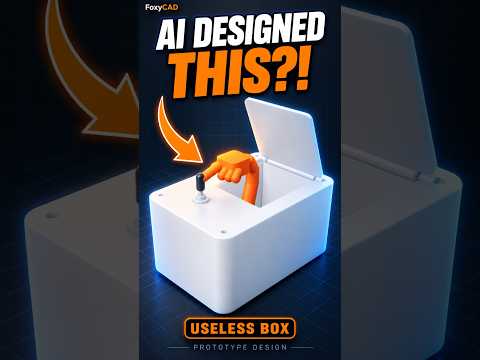
A useless box has one simple, hilarious purpose in life: when you switch it on, a mechanical arm pops out and switches it right back off. But what happens when you hand over the entire design process to Artificial Intelligence? In our latest project, we set out to see if AI could guide us through building a useless box from scratch—from the initial text prompt to a physical, 3D-printable reality.
From AI Prompt to Visual Concept
The journey started with a simple question to the AI: "Design a unique, functional useless box." Within seconds, the AI generated creative visual concepts, proposing unique aesthetic themes and mechanical layouts. While these preliminary ideas looked impressive on screen, translating an AI-generated image into a working, real-world device required precise engineering.
Bringing AI Ideas to Life with CAD Software
To turn the AI’s visual suggestions into physical components, we had to bridge the gap between creative concept and mechanical execution. This is where modern CAD software became indispensable.
Using powerful CAD software, we carefully engineered every single component—including the outer housing, servo mounts, hinges, and the toggle switch mechanism. Precision was key; even a tiny miscalculation could cause the mechanical arm to jam or miss the switch entirely. Working in a CAD software environment allowed us to test clearances and simulate mechanical movements digitally before sending any files to the 3D printer, saving valuable time and material.
3D Printing, Firmware, and Final Assembly
Once the 3D models were finalized and exported, the printing process began. While the physical parts were being created, we wrote custom firmware to control the servo motors and microswitches, ensuring smooth, precise timing for the arm’s movement.
After a quick assembly session, the final result was a fully functional, delightfully frustrating gadget. The combination of AI creativity, custom firmware, and precise mechanical engineering delivered a project that performs its single job flawlessly: turning itself off.
The Power of AI and Digital Fabrication
This project highlighted just how accessible rapid prototyping has become. By combining AI brainstorming with reliable design tools, makers can take wild ideas from imagination to tangible products faster than ever before. Whether you are building complex engineering projects or playful gadgets, bringing your ideas to life is easier than ever.


