
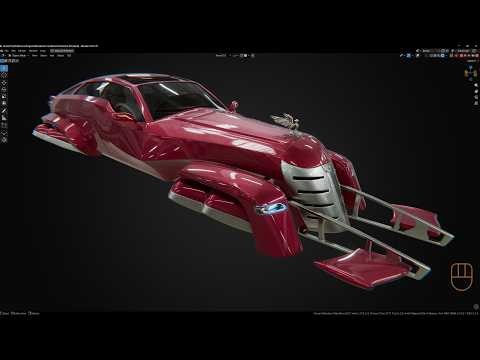
Creating standout 3D assets requires a solid grasp of both geometric precision and fluid artistic expression. Whether you are designing futuristic vehicles, detailed environmental props, or mechanical armor, combining structured hard surface workflows with 3D Digital sculpting is one of the most effective ways to elevate your overall artwork in Blender.
Blending Hard Surface Techniques with Sculpting Workflows
Hard surface modeling traditionally focuses on sharp angles, clean topology, and exact proportions. However, limiting yourself strictly to standard polygonal modeling can slow down your initial concept phase. By incorporating 3D Digital sculpting into your hard surface pipeline, you gain the freedom to rapidly block out complex silhouettes, panel cuts, and mechanical forms without worrying about polygon counts upfront.
Once your primary shapes are sculpted and approved, you can easily apply retopology techniques, booleans, and bevel modifiers to achieve polished, render-ready manufactured surfaces. This hybrid approach gives digital artists the creative speed of freeform sculpting alongside the crisp accuracy required for industrial and sci-fi assets.
Accelerating Growth Through Art Reviews
No matter how long you have been working with 3D software, constructive feedback remains essential for artistic growth. Submitting your work for live art reviews allows you to catch technical and visual blind spots in your geometry, shading, and lighting setups.
Community reviews offer fresh perspectives on common modeling hurdles, such as: - Fixing pinching geometry on curved surfaces - Optimizing edge loops for cleaner sub-d modeling - Balancing focal points and overall silhouette proportion
Take Your 3D Skills to the Next Level
Mastering the art of 3D Digital sculpting and hard surface modeling is a continuous journey of learning and refinement. Keep experimenting with Blender’s powerful toolsets, participate in art review sessions, and join live streams to exchange tips with fellow creators!


